

제품 특징
⊙ RPA의 작동 원리
RPA는 주로 다음 세 가지 enzyme component를 이용하여 target DNA를 증폭합니다.
- Recombinase proteins (UvsX, UvsY) - Primer와 결합하여 double-stranded DNA에서 상보적인 target sequence를 탐색합니다.
- Single-stranded DNA binding protein (SSB) - 분리된 single-stranded DNA를 안정화하고 재결합을 방지합니다.
- Strand-displacing polymerase - 별도의 고온 denaturation 과정 없이 새로운 DNA strand를 합성합니다.
이러한 enzyme들이 함께 작용하여 일정한 온도에서 연속적인 amplification이 진행되며, target sequence를 빠르게 증폭합니다.

⊙ 빠른 Amplification
RPA는 약 10–20분 내 target amplification이 가능하여 일반적인 PCR workflow보다 빠르게 결과를 확인할 수 있습니다.
신속한 결과가 중요한 point-of-care diagnostics, field testing 및 decentralized screening과 같은 application에서 빠른 turnaround time을 제공합니다.
⊙ 낮은 반응 온도와 간단한 Instrumentation
RPA는 37–42°C의 일정한 온도에서 반응하므로 복잡한 thermal cycling이 필요하지 않습니다.
따라서 portable heater, battery-powered instrument, compact incubator 등과의 integration이 용이하며, microfluidic device 및 현장형 diagnostic platform 개발에도 적합합니다.
⊙ 높은 Inhibitor Tolerance
RPA는 blood, soil, food matrix 등 biological sample이나 nucleic acid extraction 과정에서 발생할 수 있는 다양한 inhibitor에 높은 tolerance를 보입니다.
이를 통해 sample preparation 단계를 단순화하거나 최소화하는 workflow 개발에 활용할 수 있습니다.
단, inhibitor tolerance는 sample matrix와 target에 따라 달라질 수 있으므로 실제 application에서는 개별적인 validation이 필요합니다.
⊙ RPA Applications
RPA는 특히 빠른 분석과 간단한 instrumentation이 필요한 application에 적합합니다.
- Point-of-care diagnostics
- Infectious disease detection
- Field-based molecular testing
- Agricultural and environmental monitoring
- Food safety testing
- Veterinary diagnostics
- Portable diagnostic platform development
RPA는 PCR을 완전히 대체하는 기술이라기보다, 빠른 결과와 portability, 간소화된 instrumentation이 중요한 application에서 강점을 갖는 amplification technology입니다.
Extensive multiplexing, 정밀한 quantification 또는 기존 regulatory workflow가 중요한 경우에는 PCR이 더 적합할 수 있습니다.
⊙ RPA와 LAMP의 비교
Isothermal amplification은 일정한 온도에서 nucleic acid를 증폭할 수 있어, point-of-care diagnostics, environmental monitoring 및 field-based testing을 위한 molecular assay 개발에 널리 활용되고 있습니다.
Thermal cycling이 필요하지 않기 때문에 복잡한 thermocycler 없이도 반응을 수행할 수 있으며, 보다 단순하고 portable한 nucleic acid detection system을 구현할 수 있다는 장점이 있습니다.
대표적인 isothermal amplification 기술로는 LAMP(Loop-Mediated Isothermal Amplification)와 RPA(Recombinase Polymerase Amplification)가 있습니다.
두 방식 모두 thermal cycling 없이 target nucleic acid를 증폭하지만, primer design, 반응 시간, operating temperature 및 inhibitor tolerance 측면에서 차이가 있습니다. 따라서 application과 assay development 환경에 따라 적절한 amplification chemistry를 선택하는 것이 중요합니다.

⊙ 간단한 Primer Design
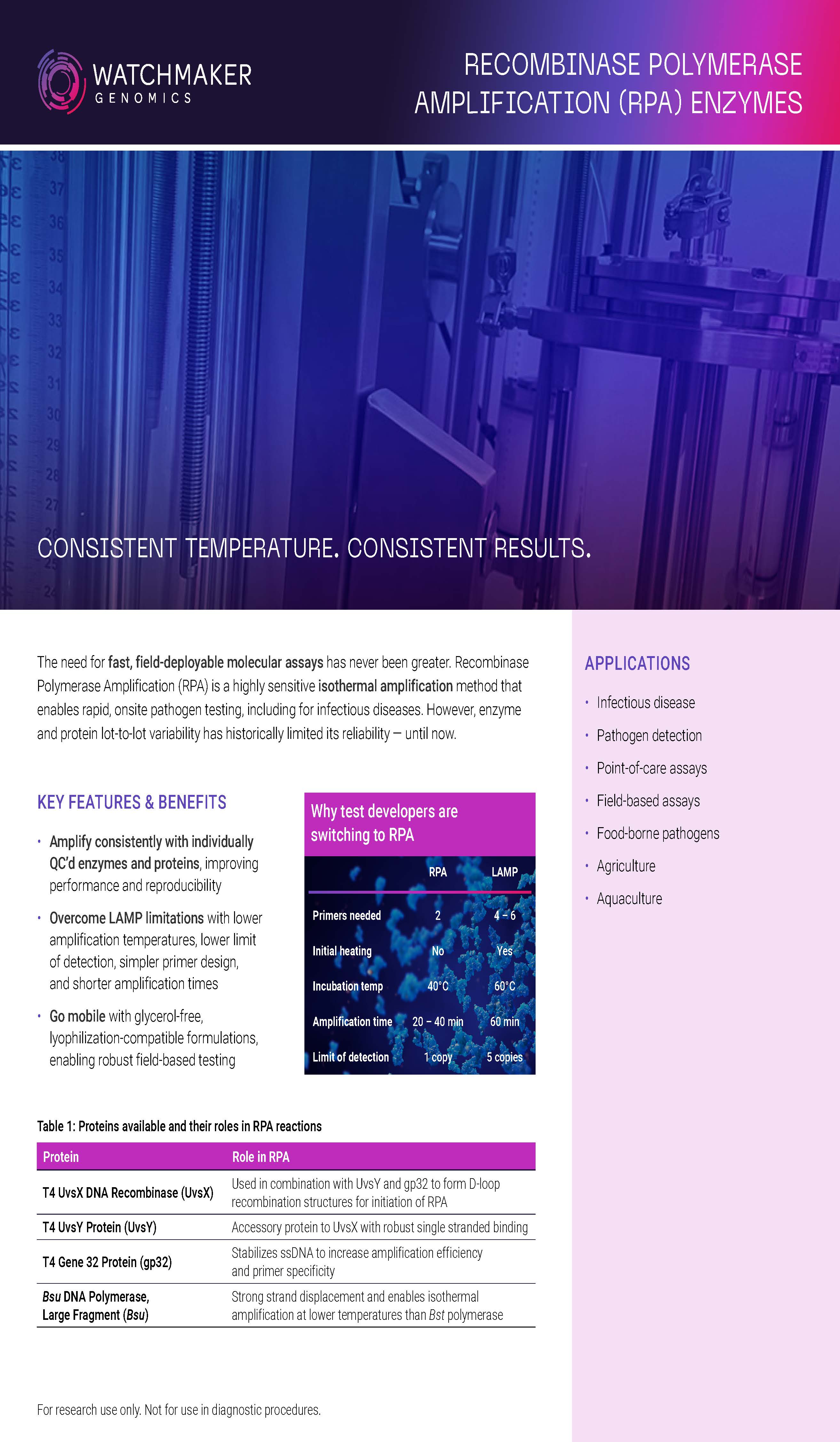
LAMP는 하나의 template에서 여러 target region을 인식하기 위해 일반적으로 4–6개의 primer를 사용합니다. 여러 primer를 동시에 설계하고 검증해야 하기 때문에 assay development 과정이 복잡해질 수 있으며, primer 간 interaction이나 nonspecific amplification 가능성도 함께 고려해야 합니다.
특히 새로운 pathogen이나 빠르게 변화하는 target을 대상으로 assay를 개발하는 경우에는 primer design과 optimization에 추가적인 시간이 필요할 수 있습니다.
반면 RPA는 conventional PCR과 유사하게 2개의 primer만을 사용합니다. 따라서 primer design과 assay optimization을 보다 단순화할 수 있으며, 빠른 assay development가 필요하거나 target sequence variation이 많은 application에서 유리할 수 있습니다.

그림설명. LAMP와 RPA의 primer requirement 비교